

Introduction:
Fertilizers are essential to modern agriculture, providing the necessary nutrients that crops need to thrive and yield high-quality produce. However, their role extends beyond just boosting crop growth. Proper fertilization practices are a key component of sustainable agriculture, helping to increase productivity, preserve soil health, and minimize the environmental footprint of farming. As global food production faces increasing challenges, including climate change, population growth, and soil degradation, sustainable fertilization practices are more critical than ever. In this article, we will explore how fertilizers contribute to sustainable farming, focusing on their role in enhancing productivity, maintaining soil health, and reducing environmental impact.
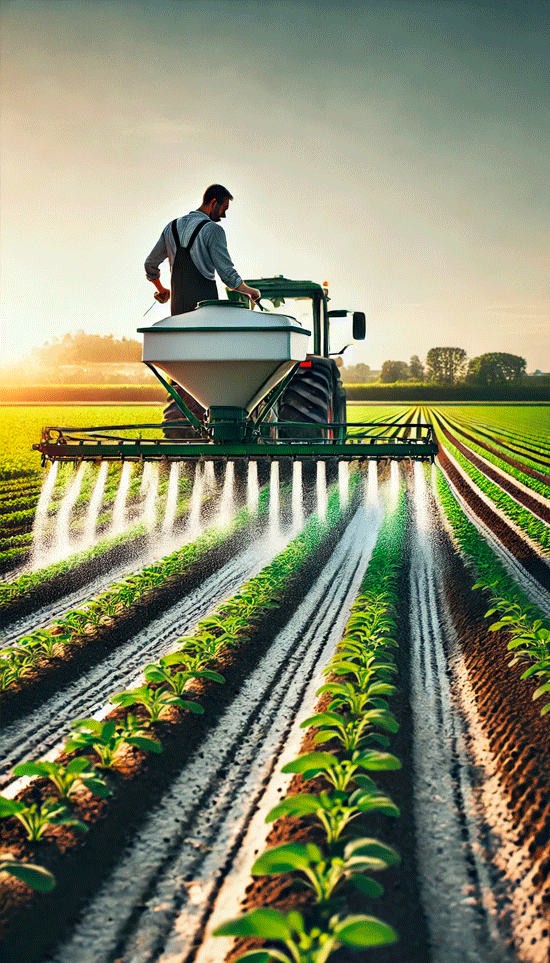
1. Fertilizers and Increased Productivity:
One of the primary benefits of fertilizers is their ability to boost crop yields and ensure that plants receive the nutrients they need to grow efficiently. By supplying essential macronutrients such as nitrogen, phosphorus, and potassium, fertilizers enable plants to achieve higher productivity in both quantity and quality.
Ensuring Adequate Nutrients: Fertilizers provide crops with the nutrients they need for optimal growth. In soil with low nutrient availability, fertilizer application ensures that crops can access the essential elements required for healthy development. For example, nitrogen promotes vigorous vegetative growth, phosphorus supports root development and flowering, and potassium improves disease resistance and fruit production.
Optimizing Yield and Quality: Fertilizer application can significantly improve crop yield, which is crucial for feeding a growing global population. By ensuring that plants receive a balanced supply of nutrients, fertilizers help produce healthy, high-yielding crops that meet market demands for both quantity and quality. This is particularly important for high-demand crops like wheat, rice, and vegetables, where fertilizer application can make a considerable difference in overall productivity.
Increased Food Security: Fertilizer application supports food security by increasing the reliability of crop production, especially in regions where soil fertility is low. Fertilizers help to ensure that farming operations can maintain consistent yields and provide the necessary nutrition for a growing population. By enhancing productivity, fertilizers contribute to the stability of food supplies, which is essential for global food security.
2. Preserving Soil Health Through Balanced Fertilization:
Sustainable agriculture relies heavily on maintaining and improving soil health. Fertilizers, when applied correctly, can support long-term soil fertility and prevent soil degradation. However, improper fertilizer use can lead to nutrient imbalances, soil acidification, and other negative impacts. Proper fertilization practices are key to preserving soil health for future generations.
Preventing Soil Depletion: Over time, crops deplete the soil of essential nutrients, which can lead to reduced fertility and productivity. Fertilizers replenish these nutrients, maintaining a balance in the soil and ensuring that crops have access to the required elements for healthy growth. This is particularly important in intensive farming systems, where repeated crop cultivation can quickly deplete the soil’s natural nutrient reserves.
Improving Soil Structure: Organic fertilizers, such as compost or manure, not only provide essential nutrients but also improve soil structure. These fertilizers enhance soil organic matter, which helps increase water retention, improve aeration, and promote healthy microbial activity in the soil. A healthy, well-structured soil promotes better root development and nutrient absorption, which supports plant health and long-term productivity.
Maintaining Soil pH Balance: Fertilizers also help maintain soil pH within the optimal range for plant growth. Certain fertilizers, such as lime or gypsum, can be used to adjust soil pH levels and ensure that crops can access the nutrients they need. For instance, acid-loving plants, such as blueberries, require soil with a lower pH, while other crops may thrive in neutral or slightly alkaline conditions.
Nutrient Recycling: Fertilizers can also support nutrient cycling within the soil. By adding organic materials like compost, farmers help return nutrients to the soil in a form that plants can use. This recycling process reduces the need for synthetic fertilizers over time, promoting sustainability and reducing reliance on chemical inputs.


3. Reducing Environmental Impact with Sustainable Fertilization Practices:
While fertilizers are essential for supporting productivity and soil health, their application must be managed carefully to minimize environmental impact. Inefficient use of fertilizers can lead to nutrient runoff, water pollution, and greenhouse gas emissions. Sustainable fertilization practices focus on reducing these negative effects while optimizing fertilizer use.
Minimizing Nutrient Runoff and Leaching: One of the biggest environmental challenges associated with fertilizers is nutrient runoff, where excess fertilizer washes into waterways, causing nutrient pollution and contributing to problems like eutrophication. Eutrophication leads to harmful algal blooms, fish kills, and the deterioration of aquatic ecosystems. To mitigate this, farmers can adopt techniques such as using slow-release fertilizers, applying fertilizers in smaller doses over time, and using precision application methods to target specific areas of need.
Adopting Precision Agriculture Techniques: Precision agriculture uses technology, such as GPS, sensors, and drones, to apply fertilizers with greater accuracy and efficiency. By tailoring fertilizer applications to the specific needs of different areas within a field, farmers can reduce fertilizer waste and ensure that nutrients are applied only where they are needed. This reduces nutrient loss, increases efficiency, and minimizes environmental pollution.
Reducing Greenhouse Gas Emissions: Fertilizers, particularly nitrogen-based fertilizers, can contribute to the emission of greenhouse gases such as nitrous oxide, a potent climate forcer. However, recent innovations in fertilizer technology, such as controlled-release fertilizers and inhibitors that reduce nitrous oxide emissions, are helping to mitigate these effects. Additionally, optimizing fertilizer use through proper timing and application methods can reduce the overall amount of fertilizer needed, leading to fewer emissions.
Incorporating Organic Fertilizers: Organic fertilizers, such as compost and manure, contribute to reducing the environmental impact of farming by improving soil structure, enhancing nutrient cycling, and reducing the need for synthetic fertilizers. The use of organic fertilizers supports biodiversity, promotes soil health, and reduces the risk of nutrient runoff, making them an important component of sustainable farming practices.
4. The Role of Fertilizers in Integrated Farming Systems:
Sustainable farming practices often involve integrated farming systems (IFS), where different agricultural activities, such as crop cultivation, livestock farming, and agroforestry, are combined to improve overall farm efficiency and reduce environmental impact. Fertilizers play a key role in IFS by enhancing the productivity of each component while ensuring the long-term sustainability of the farm.
Optimizing Crop-Livestock Systems: Fertilizers are often used in integrated crop-livestock systems, where manure from livestock is used to fertilize crops, creating a closed nutrient loop. By efficiently recycling nutrients through the use of organic fertilizers, farmers can reduce their dependence on synthetic fertilizers, improve soil health, and increase overall farm sustainability.
Agroforestry and Fertilizer Use: In agroforestry systems, where trees and crops are grown together, fertilizers help ensure that both tree and crop species have access to the nutrients they need for healthy growth. By using fertilizers strategically in these systems, farmers can maximize productivity while promoting biodiversity and improving soil health.

Conclusion:
Fertilizers play a vital role in supporting sustainable agriculture by increasing crop productivity, maintaining soil health, and reducing environmental impact.
When applied responsibly and in the right proportions, fertilizers contribute to a more efficient farming system that benefits both growers and the environment.
Through balanced fertilization, precision application methods, and the use of organic and eco-friendly fertilizers, farmers can optimize crop yields, preserve soil fertility, and minimize nutrient loss, ensuring long-term agricultural sustainability.
By adopting sustainable fertilization practices, farmers not only improve their productivity but also contribute to the health of the planet and the resilience of agricultural systems for future generations.


Let's take the first step
Start Your Partnership with Us Today
Begin your collaboration with us with minimal order quantities, perfect for analyzing our products and assessing their benefits for your crops. Starting to work with us is simple—just click the button and visit our page to learn more. Let’s take the first step toward improving your agricultural practices together!